
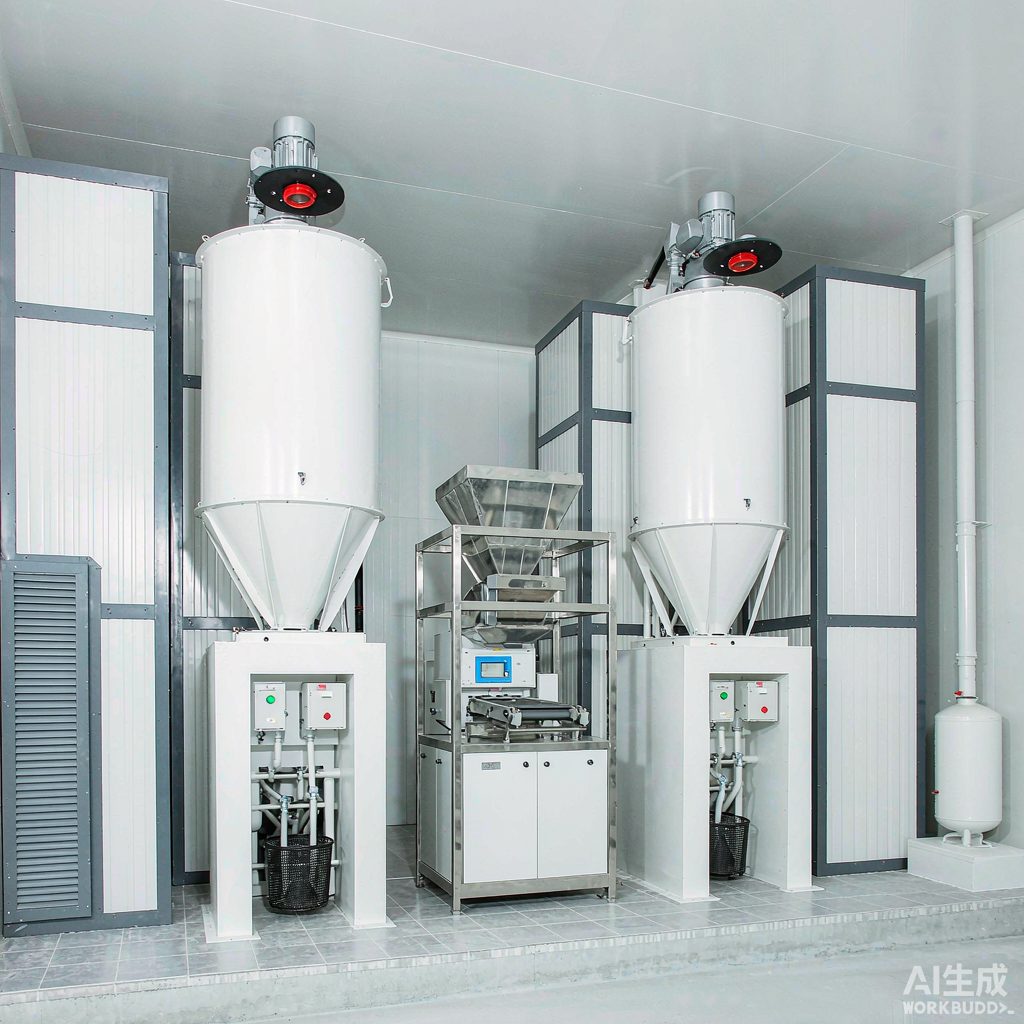
Lithium hydroxide monohydrate is the material that humbles equipment catalogs: hygroscopic, cake-forming, bridge-building. The bin that flowed graphite for years will rat-hole LiOH in a shift. Bridging in lithium salt service is predictable — which means it is preventable. Here is the order of operations.
Why LiOH Bridges at All
Two mechanisms stack: hygroscopic caking (the powder absorbs moisture, forms crystal bridges that harden) and compressive bridging (fine, cohesive powder arches over the outlet under its own weight). The first is atmosphere; the second is geometry. Fixing only one gives you a hopper that bridges on humid days instead of every day.
Step 1: Test the Actual Material
Lithium salts vary by producer, lot and hydration state. A wall-friction and flow-function test on your lot — not a literature value — gives the hopper half-angle, outlet size and required flow pattern. This is a one-week lab task that decides whether everything downstream works.
Step 2: Design for Mass Flow
Funnel flow (material moves down a center channel while the rest sits and cakes) is the enemy. Steep-walled, smooth-lined hoppers that move the whole bed — mass flow — deny LiOH the stagnant zones where cakes form. Lining choice (PTFE or polished SS) comes straight from the friction test.
Step 3: Discharge Aids, Correctly Applied
- Massaging frames — flexible hopper walls activated intermittently; effective on cohesive salts without compacting
- Vibration — only as short pulses at discharge start; continuous vibration consolidates LiOH
- Rotary lump breakers — for material that has already caked upstream (rail car, big bag, storage)
- Aeration — carefully: with hygroscopic powders, dry air only, or you feed the caking mechanism
Step 4: Atmosphere Control
If the hopper breathes humid air, every solution above decays. Sealed hoppers with dry-air or nitrogen blanket, dew-point monitored, keep the material at its tested flow condition. On LiOH this is not an upgrade — it is part of the design basis.
What Good Looks Like
- Flow test on the actual lot before hopper dimensions are frozen
- Mass-flow geometry with friction-tested lining
- Intermittent discharge aids, never continuous vibration
- Sealed, dry-blanketed storage with dew-point alarms
- Lump-breaking capacity sized for the worst incoming bag, not the average
Free Material Flow Assessment
Send 5 kg of your material — our lab returns wall friction, flow function and recommended hopper geometry with discharge-aid selection, free, with a video of the test.
Request Free Assessment